
Speedy Freight
A research-led redesign for a same-day logistics business, delivered with Roaring Lion Media, from internal and customer research through to a documented design system.
- Focus
- UX research, Design systems, Logistics
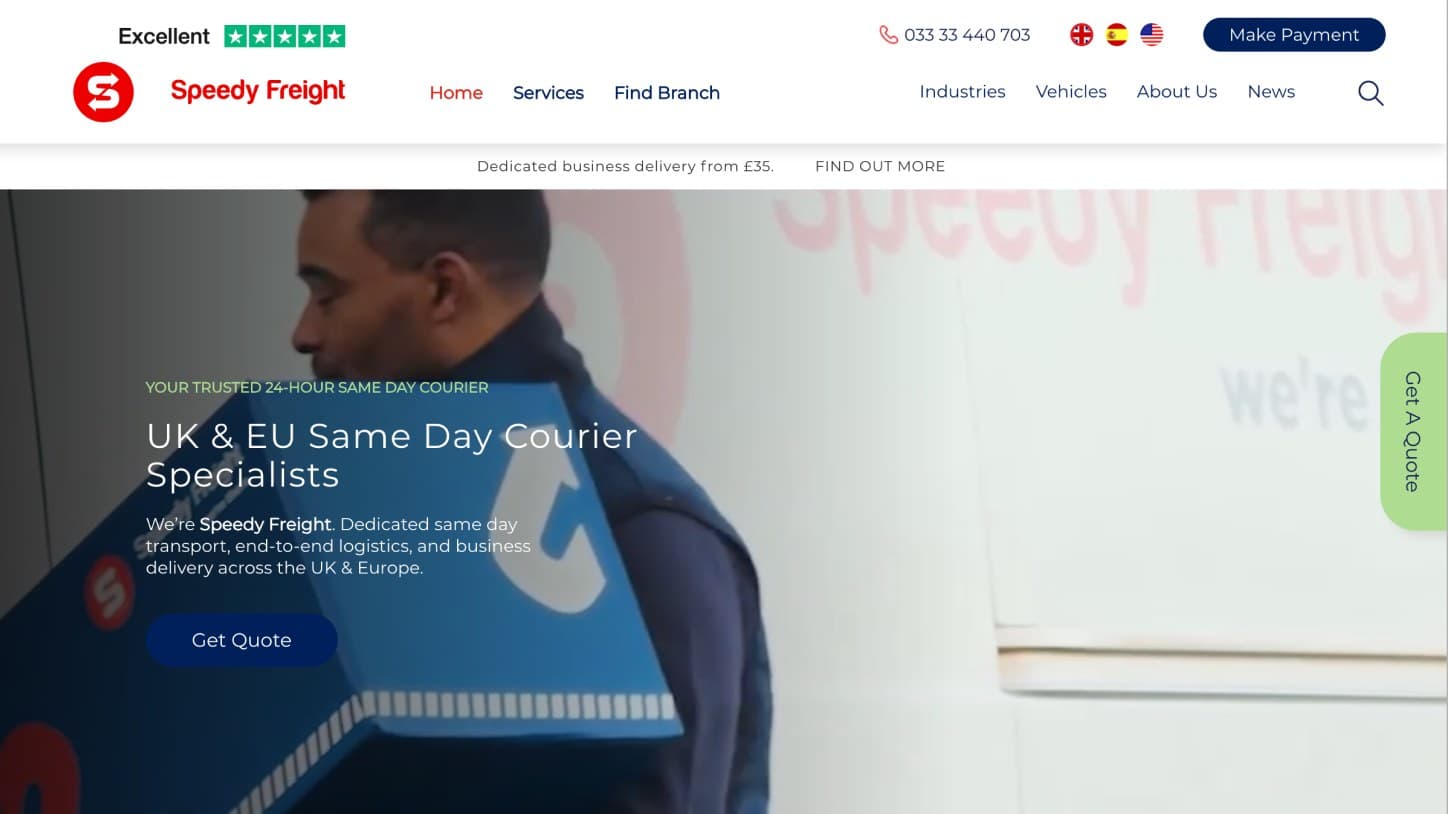
Speedy Freight is a same-day logistics business, and a well-established one. The work came through Roaring Lion Media, the agency whose own site I'd designed, who brought me in on one of their key client relationships.
A surface-level redesign wouldn't have got anywhere here. Logistics has more people inside the loop than most businesses realise, so before designing anything I put a research plan together and we went and asked them.
That meant internal workshops and interviews across departments, from booking coordinators through to drivers and account managers, because the friction a customer feels usually starts somewhere internal. It also meant qualitative research with customers about how they book, what they expect and what irritates them about the platform they had. Then we mapped the key journeys to see where the gaps and the wasted effort actually sat.
Only after that did the design start. User flows first, aimed squarely at the booking experience for both new and returning customers. Wireframes next, sorting out navigation and putting the important actions where people were already looking for them. Modularity mattered more than usual, because the same site has to serve someone booking a single van and an enterprise account with a standing arrangement.
What came out of it was a component-based design system rather than a stack of page designs, with detailed UI built on top of it, plus documentation covering the component library and the reasoning behind each decision, so development had as little as possible to guess at.
I should be clear about the boundary. What I delivered was a developer-ready design system and UI, handed over with the research and the rationale behind it. I wasn't responsible for the build, and I've no post-launch numbers to point at, so I won't pretend otherwise. The part I'd stand behind is the process. Every design decision traces back to something somebody said in a workshop or an interview, and that isn't always true of a redesign this size.