
The future of experience design
A four-pillar view of where retail experience at Selfridges should go next, written to start arguments in the right rooms rather than to be signed off.
- Period
- Aug 2016 to Feb 2026
- Focus
- Experience strategy, Retail innovation, Team design
The challenge
Almost everyone's attention goes on the next release, mine included. That's reasonable, but it means nobody is looking more than a couple of quarters out, and for a business whose reputation rests on being a place worth travelling to, that's a real risk. Selfridges was never short of ideas about the future of the store. What it didn't have was a shared way of talking about them, so proposals got judged one at a time on how exciting they sounded, with nothing to weigh them against.
My role
Head of UX, Digital Design & Content Management. Wrote the long-term experience direction and the team shape needed to deliver it, then used both to open the conversation across Product, Brand, Marketing and Retail.
The approach
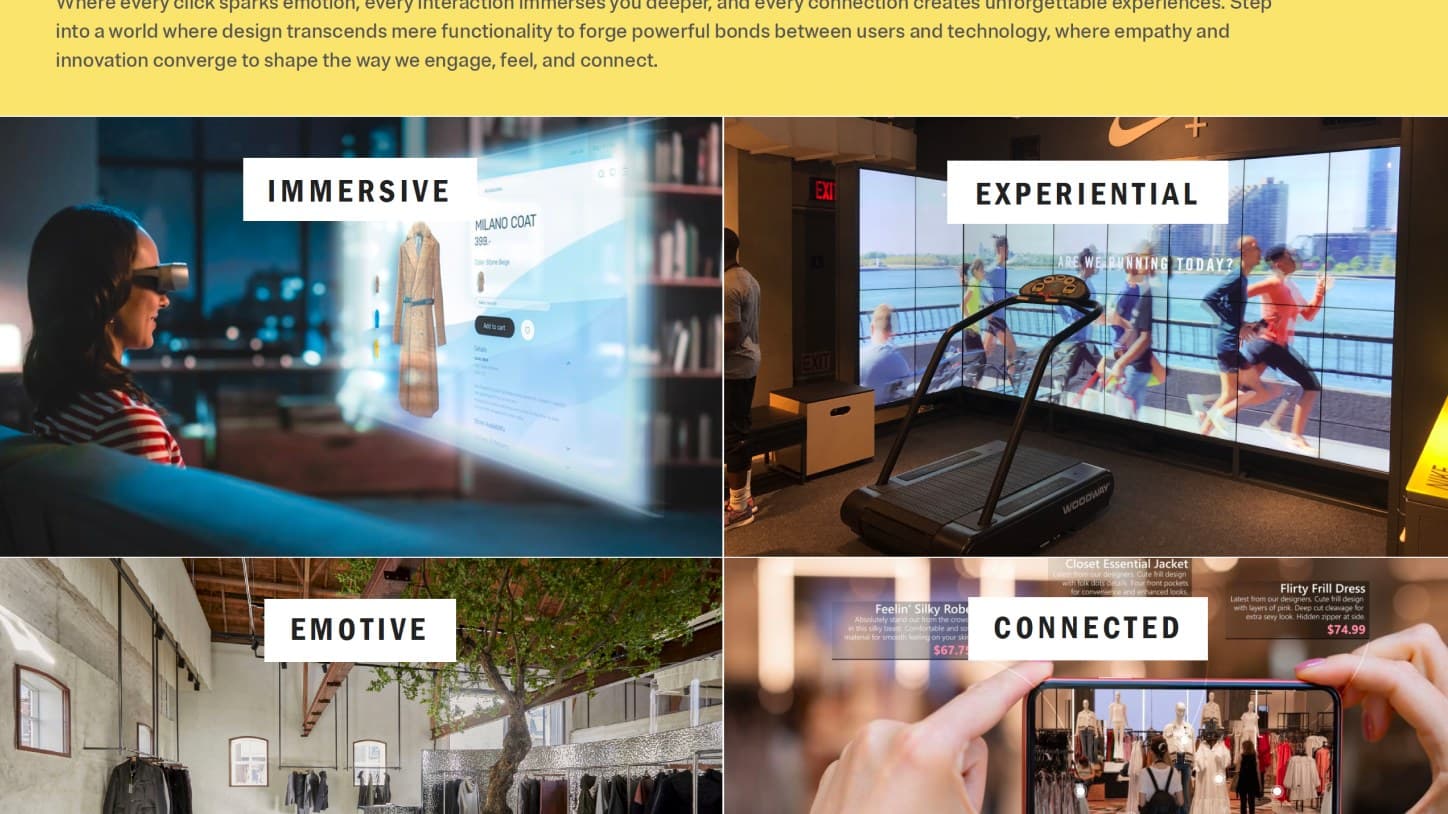
- Set out four pillars: immersive experience, experiential spaces, luxury retail and emotive connection, and physical and digital convergence.
- Argued that immersive technology has to earn its place by giving a customer something, rather than existing to be photographed.
- Described experiential spaces by what they do for a visitor, whether that's engaging the senses or letting someone try a product properly.
- Made the case that in luxury retail the emotive part is most of the value, so time spent and service given matter as much as the transaction does.
- Treated physical and digital as one experience, because customers move between them constantly and notice every bit of friction when they do.
- Mapped the team it would take: UX designers, researchers, creative technologists, service designers and content strategists, with more investment in experience research behind them.
- Set out the governance that would bring UX into decisions early rather than at the execution end.
What I learned
I'd written versions of this before that went nowhere, usually because they were too finished. Nobody argues with a polished deck, they nod at it and then carry on exactly as before. This one did better because it left obvious gaps for other people to fill, and because I stopped presenting it as a plan and started using it as a question. I'm not sure how much of that was deliberate at the time.